
Constipation’s Dark Side
Did you know that constipation’s dark side could include Parkinsons? The more we know about the gut, the more we realize that it truly is our second brain in action, and its importance is right up there with the liver. Cleansing always begins with moving toxins out of your body, and you will feel so much better when you do. I have heard of headaches, tiredness, bad mood, and all sorts of aches/pains gone after going to the bathroom. It’s a quick mood lifter!
Here is an article/newsletter I found somewhere by Robert J Rowen, M.D, and how constipation can affect so many systems of the body.
“Did you know that the number of times you visit a bathroom every day can determine your risk of Parkinson’s disease? I know it sounds crazy, but it’s true.
I had a patient several years ago who suffered from an extreme case of Parkinson’s disease. But, strangely enough, she would make a dramatic recovery any time she had a bowel movement. One day, she could walk around and function quite normally. The next day, though, she would have advanced Parkinson’s-like symptoms. Then she would completely recover a few days later.
This patient insisted that as long as she moved her bowels, she remained functional. If she missed a day, she would become rigid and have typical tremors of advanced disease. An enema would promptly clear it. The case was so clearly associated with constipation it made me wonder: Could Parkinson’s and constipation possibly be related? And sure enough ….
As part of an ongoing long-term (24 hour) study, a research group recently confirmed what I’ve long suspected. They found that many cases of Parkinson’s disease can be linked directly to constipation.
Over 8,000 men participated in the study. The researchers divided the men into four different groups according to how many bowel movements they had each day (less than one, one, two, more than two). Their results showed that your risk of developing Parkinson’s is four-and-a-half times greater if you have less than one bowel movement per day versus having more than two.
The authors believe that degeneration in the central nervous system causes constipation. And as that degeneration progresses, it might also lead to Parkinson’s.
I have a different theory: I think the constipation itself leads to damage to your nervous system. Here’s why: I’ve long known that bacterial toxins absorbed into your bloodstream from your gut will directly attack the cells in your nervous system. We also know that pesticides contribute to the development of Parkinson’s. This study reconfirms suspicions that toxins damage these controlling nerve cells.
Millions of men and women are developing this crippling disease. By the time symptoms manifest, the damage has been done. I believe the majority of cases can be prevented. All you have to do is eat organic foods, which eliminates your intake of pesticides, and increase the amount of fruits and vegetables in the diet. This gives you better bowel function and larger stools, minimizing the amount of time the toxic material is in contact with your colon.
You can get additional protection by taking plenty of antioxidants, particularly vitamins C and E. I also recommend the mineral selenium. All of these help maintain and recycle abundant levels of glutathione, your body’s principal detoxifier. And, finally, reduce your heavy metals and iron with chelation therapy.
The best management of Parkinson’s disease, like most chronic degenerative conditions, is prevention. It doesn’t have to happen!
Yours for better health and medical freedom,
Robert Jay Rowen, MD

Doctors Don’t Know Squat
Many homes now have a small stool, something like a squatty potty, but still many have never heard about this great device in the bathroom. Since the discussions here are centered around cleansing, removing toxic waste is the perfect place to begin. Costco near us used to sell them in packs of 2’s. Maybe you could even make one. The position of squatting really does matter.
How the modern commode contributes to appendicitis and the other diseases such as cancer, diverticulosis, colitis and irritable bowel syndrome.
by Jonathan Isbit (http://naturesplatform.com)
The term “appendicitis” was coined in 1886 by a Harvard anatomy professor named Reginald Heber Fitz. Most people assume that the disease has always afflicted humanity. But actually, it’s only been around for about 150 years – and only in the western world.
Why did it suddenly appear? And why only in the West? And what causes appendicitis? Ask any gastroenterologist these questions and you’ll get the same answer: “Nobody knows.”
A number of other colon and pelvic diseases also got their start toward the end of the nineteenth century – including diverticulosis, colon cancer, inflammatory bowel disease, and prostate and uterine disorders.
The medical profession responded by devising ever more sophisticated surgical techniques to remove the diseased organs. Once again, having no inkling of the cause, they ruled out any means of prevention.
In the 1970’s, a British surgeon named Denis Burkitt, who had practiced medicine in Uganda for twenty years, reported a remarkable absence of these ailments among the people of Africa. The same diseases that afflict African-Americans in large numbers were curiously absent in the land of their ancestors.
Further research by epidemiologists showed a similar immunity in Asian countries, especially the rural areas. And once again, on moving to the West, these ethnic groups quickly became just as prone to western diseases as the rest of the population.
Dr. Burkitt believed that two aspects of the African’s lifestyle protected them from colon ailments. First, their diet contained higher levels of fibre. And second, they used the natural squatting posture for bowel movements. . . . . . . . . .
Historically, human beings have always squatted for bodily functions. Every infant instinctively uses this method until he is forced to sit on a potty. Most of the adults in the world continue to use squat toilets all their lives. It was only about 150 years ago that the “porcelain throne” came into widespread use.
It was basically a fad that started in England and quickly spread throughout the western world. No country wanted to appear backward and uncivilized, and no one at the time realized what the medical consequences might be. Even if they happened to be aware of the drawbacks of this new, contrived method of evacuation, they were unwilling or unable to break the Victorian taboo surrounding the subject.
As the fad continued to spread, doctors noticed a mysterious upsurge in colon, bladder, and reproductive diseases. The medical profession was caught in a conflict of interest. Since treatment was becoming so lucrative, they had little motivation to explore the cause or to find means of prevention.
How does the modern commode contribute to these diseases? There are two basic kinds of damage. The first comes from pressure on the pelvic floor from chronic straining in the sitting position. Over time, the pelvic floor “descends”, stretching and injuring the nerves that supply the bladder, the prostate and the uterus. The result is that these organs become dysfunctional and prone to disease.
The second type of damage is caused by fecal stagnation, from incomplete evacuation. A polluted colon is prone to cancer, diverticulosis, appendicitis, colitis and irritable bowel syndrome. The following explanation of appendicitis answers the questions with which this article began:
The appendix is attached to the cecum, at the beginning of the colon. When fecal matter gets lodged in the appendix, it hardens, causing the appendix to suffocate and die. This only happens to users of the modern commode, for two reasons:
The cecum cannot be fully evacuated in the sitting position. It needs to be squeezed empty by the right thigh while squatting.
Pushing down with the diaphragm in the sitting position can force waste matter into the appendix. On a squat toilet, you don’t hold your breath or push downwards. The posture itself effortlessly generates the required pressure for expulsion. The appendix was not “poorly designed” – contrary to what is taught in medical schools. Like the rest of the colon, it was designed with squatting in mind.”
Your Muffin Ring can Threaten your life
The idea of cleansing and rebuilding is to help your body become balanced. The sentence in this article that I would like to stress is “Researchers recommend developing lifelong healthy dietary and physical activity habits to avoid a pot belly.” Excess fat around the middle (I call the muffin ring) can put you at greater risk of having clogged arteries. We all need the right fats (plant fats), and to cut out the wrong fats (trans fats, fried foods).
“The Perils of Toxic Waists“ – The Canadian Living Magazine, Feb, 2008
The Study: Researchers at the University of Texas Southwestern Medical Center in Dallas investigated the reliability of waist circumference as a measurement of heart disease risk.
Findings: Subjects who developed fat around the middle had a greater risk of having a heart attack than those who developed fat around the hips. Waist fat is considered to be more active in clogging arteries. Researchers recommend developing lifelong healthy dietary and physical activity habits to avoid a pot belly.
Background: Until recently, body mass index (BMI: weight in kilograms divided by the square of height in meters) was used to measure the risk of heart attack and other cardiovascular problems. But many experts suspected that BMI findings alone may not give a clear enough picture of risk.
Published in the journal of the American College of Cardiology. This new study included almost 3,000 men and women between the ages of 18 and 65.
– Lyndsie Bourgon
8 Kidney Cleansing Recipes
The kidneys are vital to the body, and a kidney cleanse is as important as a colon cleanse.
Every day, the kidneys process approx. 200 quarts of blood in order to sift out 2 quarts of waste products and extra water. The waste and extra water become urine, which flows to your bladder. The kidneys remove the wastes from the blood. If they didn’t, your body could not function and you would soon die.
Here are some symptoms or signs that you might have a kidney stone: excruciating pain in your back and side, so bad that you feel as if you might vomit, nausea, or pain so bad that has been compared to giving birth.
This is something to AVOID! Keep your kidneys in good shape by going on a kidney cleanse, or cleaning out stones naturally.
Here are some ideas:
1. Drink lots of pure water every day . Adequate fluids are the best prevention of kidney stones. Drink half your body weight in ounces each day. You can add unrefined celtic sea salt (containing sea minerals) to supplement your cleanse. e.g. If you weigh 120 pounds, you would drink 60 ounces of water each day.
2 . Hulda Clark’s official Kidney Cleanse. Cleanse your kidneys twice a year and get rid of kidney stones naturally and without surgery. Get the Recipe Here
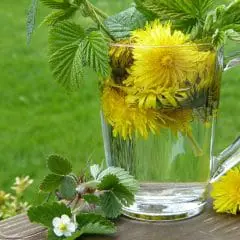
3. Dandelion Tea. During an attack drink as much dandelion tea as you can. This is a strong diuretic and it stimulates blood circulation through the kidneys. See our recipe to make the tea. Add 2 teaspoons of dried dandelion root to 1 cup of boiling water. Steep for 15 minutes and drink.
4. Celery Seed Cleansing Tea – Get the recipe here.
6. Carrot Juice. Try a blend of carrot, celery, parsley and apple juiced in your juicer. Drink 1-3 glasses per day. Dr. L. Newman says in his book Make Your Juicer Your Drug Store: “…it contains practically all the range of minerals and vitamins required by the body, being especially high in Vitamin A, the healing vitamin. This makes it of inestimable value in cases of …bronchial trouble, lung trouble, for the liver, gall bladder and kidneys …and kidney stones…and for restoring pep and energy”.
7. Cranberry Juice. Drink 1 cup of natural (unsweetened) cranberry juice per day.
8. Coconut Water for Urinary Tract problems – At the market or vegetable section of the grocery store you can often find fresh coconuts. In our area we have asian markets where whole coconuts are plentiful. Fresh water from the coconut can help urinary tract symptoms. I have used a hammer and large nail to pour out the water through a large straw. We collected the water in a glass jar and drank the water. The taste is refreshing and slightly sweet. The coconut is an amazing powerhouse of anti-aging properties. Try it for smooth skin and younger complexion! It is known for some of the following things:
- reducing urinary problems
- helps swelling in the hands and feet
- boosts poor circulation
- fights bacteria and viruses
- helps break up kidney stones
- plus much more, so give it a try for your kidney health
Hulda Clark Kidney Cleanse Recipe
Dr. Hulda Clark’s approach to DIY “cleaning up” the body organs in an attempt to relieve the stress of toxicity and initiate healing is brilliant. The Clean-Ups are not even difficult, and the results are worth all the time it takes. Dr. Clark’s Liver Cleanse Recipe and this Kidney Cleanse Recipe one are two of the most important cleanses in beginning the Hulda Clark protocol.
“Killing parasites, removing pollutants and clearing gallstones and kidney stones from your body is a powerful combination of treatments. It is so powerful you can change yourself into a new person in half a year and then go on improving for years more.
Dr. Hulda R. Clark, from “The Cure for All Diseases”
KIDNEY CLEANSE RECIPE
from “The Cure for All Diseases” by Dr. Hulda Clark
Ingredients:
- 1/2 cup dried Hydrangea root
- 1/2 cup Gravel root
- 1/2 cup Marshmallow root
- 4 bunches of fresh parsley
- Goldenrod tincture (leave this out of the recipe if you are allergic to it)
- Ginger capsules
- Uva Ursi capsules
- Vegetable glycerin
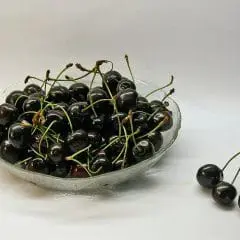
- Black Cherry Concentrate, 8 oz
- vitamin B6, 250 mg
- Magnesium oxide tablets, 300 mg.
Measure 1/4 cup of each root and set them to soak, together in 10 cups of cold tap water, using a non-metal container and a non-metal lid (a dinner plate will do). After four hours (or overnight) add 8 oz black cherry concentrate. Heat to boiling and simmer for 20 minutes. Drink 1/4 cup as soon as it is cool enough. Pour the rest through a bamboo strainer into a sterile pint jar (glass) and several freezable containers. Refrigerate the glass jar.
Boil the fresh parsley, after rinsing, in 1 quart of water for 3 minutes. Drink 1/4 cup when cool enough. Refrigerate a pint and freeze 1 pint. Throw away the parsley.
Dosage: Each morning, pour together 3/4 cup of the root mixture and 1/2 cup parsley water, filling a large mug. Add 20 drops of goldenrod tincture and 1 tablespoon of glycerin. Drink this mixture in divided doses throughout the day. Keep it cold. Do not drink it all at once or you will get a stomachache and feel pressure in your bladder. If your stomach is very sensitive, start on half this dose.
Save the roots after the first boiling, storing them in the freezer. After 13 days when your supply runs low, boil the same roots a second time, but add only 6 cups water and simmer only 10 minutes. This will last another 8 days, for a total of three weeks. You may cook the roots a third time if you wish, but the recipe gets less potent. If your problem is severe, only cook them twice.
After three weeks, repeat with fresh herbs. You need to do the Kidney Cleanse for six weeks to get good results, longer for severe problems.
Also take:
- Ginger capsules: one with each meal (3/day)
- Uva Ursi capcules: one with breakfast and two with supper
- Vitamin B6 (250 mg): one a day
- Magnesium oxide (300 mg): one a day
Take these supplements just before your meal to avoid burping.
Some notes on this recipe:
- this herbal tea, as well as the parsley, can easily spoil. Heat it to boiling every fourth day if it is being stored in the refrigerator; this re-sterilizes it. If you sterilize it in the morning you may take it to work without refrigerating it (use a glass container).
- When you order the herbs, be careful! Herb companies are not all the same! These roots should have a strong fragrance. If the ones you buy are barely fragrant, they have lost their active ingredients; switch to a different supplier. Fresh roots can be used. Do not use powder.
- Hydrangea (Hydrangea arborescens) is a common flowering bush.
- Gravel root (Eupatorium purpureum) is a wild flower.
- Marshmallow root (Althea officinalis) is mucilaginous and kills pain.
- Fresh parsley can be bought at a grocery store. Parsley flakes and dried parsley herb do not work.
- Goldenrod herb works as well the tincture but you may get an allergic reaction from smelling the herb. If you know you are allergic to this, leave this one out of your recipe.
- Ginger from the grocery store works fine; you may put it into capsules for yourself (size 0, 1 or 00).
There are probably dozens of herbs that can dissolve kidney crystals and stones. If you can only find several of those in the recipe, make the recipe anyway; it will just take longer to get results. Remember that vitamin B6 and magnesium, taken daily, can prevent oxalate stones from forming, but only if you stop drinking tea. Tea has 15.6 mg oxalic acid per cup. A tall glass of iced tea could give you over 20 mg oxalic acid.
Switch to herbal teas. Cocoa and chocolate, also, have too much oxalic acid to be used as beverages.
Remember that phosphate crystals are made when you eat too much phosphate. Phosphate levels are high in meats, breads, cereals, pastas, and carbonated drinks. Eat less of these, and increase your milk (2%), fruits and vegetables. Drink at least 2 pints of water a day.
Cleanse your kidneys at least twice a year.
You can dissolve all your kidney stones in 3 weeks, but make new ones in 3 days if you are drinking tea and cocoa and phosphated (carbonated) beverages. None of the beverage recipes in this chapter are conducive to stone formation.
P.S. If you have trouble finding the ingredients for the Kidney Cleanse, go over to Dr. Clark Tools where you can order the exact herbs you need.